Articles
AI products, technical architecture, and startup thinking
2026

Why I Built Pinclaw — An AI Hardware That Does Less
From DJI embedded engineer to AI wearable entrepreneur. A founder's letter on why every AI hardware company makes the same mistake, why AI's real bottleneck is permissions not intelligence, and why Pinclaw chose to do less.
2025: 730,000 Lines of Code, One Clarity
From a complete beginner to shipping hardware, podcasts, websites, and open-source projects — how AI turned one person into an army, and what I learned along the way.
2025
An Open-Source Xiaohongshu MCP Product
An exploration of an open-source MCP product for Xiaohongshu (Little Red Book) — testing its automated data extraction and trend analysis capabilities, and thoughts on what could be improved.

Greatness Cannot Be Planned
A reflection on Kenneth Stanley's thought-provoking book — why objective-driven approaches often fail, and why stepping stones without fixed goals lead to greater discoveries. Freedom of thought is essential to greatness.
Enterprise SaaS Product Thinking
An analysis of the enterprise SaaS landscape — from ServiceNow's model to why China's SaaS industry hasn't produced unicorns like Salesforce, and what structural factors hold it back.

Product Thinking for AI Travel Apps
An analysis of the AI travel product landscape — from VC classification frameworks to competitive dynamics, and why time-saving C-end products face fierce competition from tech giants.
Great AI Product Analysis 1/100: Cursor
In this column, I introduce AI products I love in simple language. As a loyal Cursor user since its early days, I share how Claude 3.5 Sonnet transformed its code generation quality and why product design is multidimensional.
How Manus Builds Multi-Agent Architecture
This article discusses two key questions: how multi-agent systems like Manus can be implemented, and how to manage information sharing across agents — using LangGraph's graph-based control flow framework.
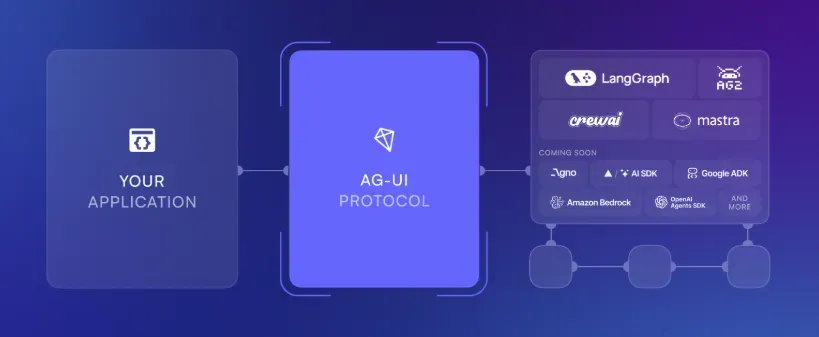
AG-UI Usage Guide
People say AG-UI is the next step after MCP. What exactly is AG-UI? It is an open protocol by CopilotKit for agent-frontend interaction. Here are some hands-on experiments and insights.

Cat Purring Algorithm Analysis
While building an AI companion toy shaped like a cat, I needed realistic purring that responds to mood and emotion. Here is my analysis of purring audio synthesis using splicing, filtering, and compression techniques.
LangGraph Persistence & Memory Module
Persistence is memory — the core of letting AI remember and personalize for users. LangGraph has a built-in persistence layer using checkpointers that save graph state at each superstep, enabling human-in-the-loop, time travel, and fault tolerance.

The Power of LangGraph
As an AI product manager, LangGraph offers a new way to build AI applications. Its polling-based approach feels more intuitive than traditional agents, with support for multi-agent, persistence, and MCP integration.

What Makes a True AI Product Manager
If you have read The Innovator's Dilemma, you know that product is the essence of competition. Large companies fail due to path dependency, while AI enables the customization that traditional product development never could.

Product Thinking for AI Vocal Coaches
Audio generation and audio understanding are two completely opposite fields. Audio generation is generative AI; audio understanding is discriminative AI. Their logic is reversed.

How to Build a Singing Model
A serial entrepreneur's exploration of building an AI singing model — from GPT-SoVITS to distilling audio models from LLMs, and why all the best audio models remain closed-source.
LLM Interview Questions Part 1
Application is a crucial direction for AI — understanding the fundamentals is key to building great products. A collection of common LLM interview questions covering model principles, optimization, and practical experience.
LLM Fine-tuning Workflow
A complete walkthrough of the LLM fine-tuning process: from defining tasks and preparing data to selecting pretrained models, adjusting architecture, setting hyperparameters, training, evaluation, and deployment.